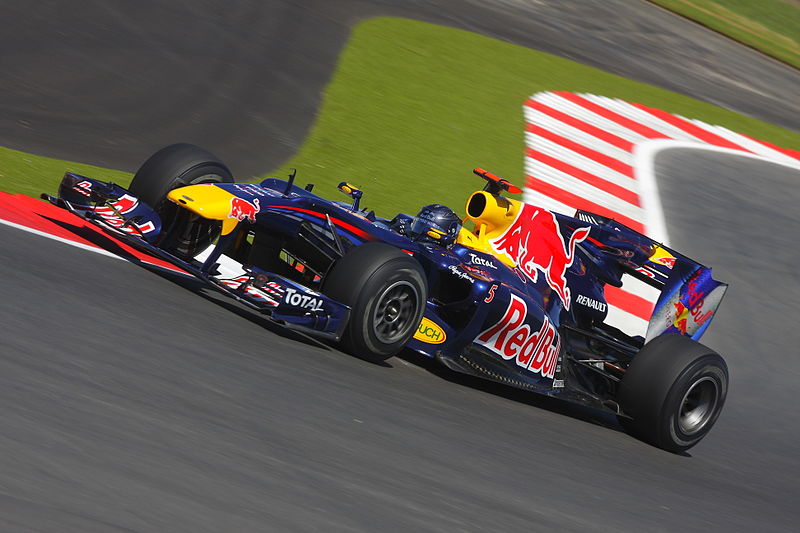

This was Bridgestone's
last season as the sole tyre supplier in Formula One as the company
announced that it would not renew its contract at the end of the season.
After several months of deliberation, Pirelli was chosen as the tyre supplier for the 2011 season at the FIA World Motor Sport Council meeting in Geneva, in June 2010.
The technical and sporting regulations applicable for the season were the subject of much debate. Before the start of the season, 2009 Drivers' Champion Jenson Button joined McLaren, while the 2009 Constructors' Champion, Brawn GP, was bought by German motor vehicle manufacturer Mercedes-Benz and was renamed as Mercedes GP. The 2010 season saw the return of the most successful driver in Formula One history, with seven-time World Champion Michael Schumacher coming out of retirement after a three-year absence.[2]
The season's first race was held on March 14 in Bahrain and the season concluded on November 14 in the United Arab Emirates after 19 motor races held in 18 countries on five continents.[3]
The Fédération Internationale de l'Automobile (FIA) had planned to introduce a budget cap, in order to safeguard the sport during the current economic downturn.
The proposal had an optional budget cap of €30 million ($45 million,
£27 million), with greater technical and design freedoms allowed to
teams who nominated to use it. The teams objected to what they believed
would be a two-tier championship and five of the teams within the Formula One Teams Association (FOTA), Ferrari, BMW Sauber, Renault, Red Bull Racing and Toro Rosso announced their intentions to withdraw from the 2010 championship BMW Sauber later announced on their withdrawal from Formula One at the end of the 2009 season, due to economic problems.
Following negotiations, the FOTA teams unanimously decided to
withdraw at the end of the 2009 season unless the budget cap rules were
changed. Williams and Force India both submitted their own entries and were temporarily suspended from FOTA,
while the remaining teams submitted conditional entries for the 2010
season. The 2010 entry list was published by the FIA on 12 June, which
included all 2009 teams and three new teams, Campos Meta, Virgin Racing and US F1 Team.
Discussions between the FIA and FOTA failed to find a resolution to the
budget cap issues and the eight FOTA teams announced intentions to form
a breakaway series for 2010. However, following a meeting of the World Motor Sport Council on 24 June, FOTA agreed to remain in Formula One and FIA president Max Mosley confirmed he would not stand for re-election in October.
During a meeting on 8 July between the FIA and FOTA on future
regulations, the teams walked out of the meeting after being informed
that they were not entered for the 2010 season and could therefore have
no input on regulatory discussions. In response it was announced that plans for a breakaway series were still being pursued. Negotiations on a new Concorde Agreement directly with CVC,
the commercial rights holders, led to the eventual end of the dispute
with its signing by the FIA on 1 August. The new Concorde Agreement will
secure the sports future until its expiration in 2012.
Testing
The new season test schedule started on 1 December 2009 with a
three-day 'Young Driver Test' (for drivers with fewer than three Formula
One race starts to their name) at Spain's Circuito de Jerez. British Formula Three Champion Daniel Ricciardo was fastest for Red Bull Racing.
As with 2009, the teams were allowed a maximum of 15,000 km (9,300 mi)
over the course of fifteen days in February. Testing sessions were
confirmed for Valencia (1–3 February), Jerez (10–13 February and 17–20 February), and Barcelona (25–28 February). All but Campos/Hispania and US F1 took part in the pre-season tests.[17][18]
Testing sessions at Jerez were constantly interrupted by heavy rain.
Pre-season testing started at the Circuit Ricardo Tormo in Valencia with seven teams. Ferrari dominated the test session, with Felipe Massa setting the fastest lap times on days one and two. In his first appearance for the team, Fernando Alonso set the fastest overall time on the third day of the test with 1:11.470.
The second session took place at Circuito de Jerez, Spain with heavy downpours throughout the test. This also marked the first public test for new team Virgin Racing who only managed five laps after a shortage of parts became a problem. Lewis Hamilton set the fastest lap of the test during a dry Saturday session with 1:19.583.
The third test at Jerez for another four-day test was also affected by mixed weather conditions.[24][25]Lotus Racing started its first public test with the T127. The penultimate and last days saw sunny weather with Jenson Button setting the fastest time (1:18.871).
The last pre-season test took place at Circuit de Catalunya, Barcelona. The test started in sunny weather with rain showers scattered through the weekend. Virgin's testing misery carried on with Lucas di Grassi crashing and more mechanical issues.[30]Lewis Hamilton set the fastest lap of the week (1:20.472) with most teams doing low fuel runs on Sunday.
In stark contrast to 2009, no one driver emerged as dominant in the early stages of the 2010 season. Fernando Alonso won the opening race of the season in Bahrain after Sebastian Vettel's engine misfired, with Alonso becoming just the sixth Ferrari driver to win on debut for the Italian team. Reigning World Champion Jenson Button claimed victory in Australia for the second year in succession, whilst Vettel won in Malaysia,
setting up a unique situation that would last for the rest of the
season whereby no driver would win a race while leading the World
Championship.
Button became the first driver to win more than one race with victory in China, but Mark Webber would be the first to take back-to-back victories with wins in Spain and Monaco. Webber was leading the Turkish Grand Prix when team-mate Vettel attempted a pass on lap 40 that ended with the two Red Bulls colliding; Vettel retired whilst Webber recovered to finish third behind eventual race winner Lewis Hamilton and Jenson Button. Hamilton would match Webber's feat of back-to-back victories by claiming first place in Canada.
The middle of the season saw controversy, starting at the European Grand Prix in Valencia following a disputed safety car ruling. Mark Webber collided with Heikki Kovalainen
at the fastest point on the circuit, the collision destroying Webber's
front wing and launching Webber into a somersault. The safety car was
deployed immediately, joining the circuit behind race leader Vettel, but
ahead of then-second placed Hamilton and the Ferraris of Alonso and Felipe Massa.
Hamilton overtook the safety car as it emerged from the pit lane but
after it had crossed the safety car control line. It took the race
stewards twenty minutes to pass verdict on the infringement, and while
Hamilton was issued with a drive-through penalty for his actions, it had
little effect as he was already well clear of the rest of the field.
The British Grand Prix
marked the halfway point of the season and was the source of further
controversy, this time in the Red Bull garage as the "Red Bull Civil
War" spilled over into open hostilities when team principal Christian Horner
removed the team's Silverstone-spec front wing from Mark Webber's car
and placed it on Vettel's for qualifying and the race after the German
driver damaged his in the final practice session. Webber won the race
after Vettel developed a puncture on the first lap and was forced to
pit.
The German Grand Prix
saw a return to form for Ferrari, with both Alonso and Massa quickest
over the course of the race meeting. On the anniversary of his accident,
Felipe Massa led most of the race before a message from the Ferrari pit
appeared to be a coded instruction telling Massa to move over and let
Alonso through, granting Alonso seven extra World Championship points
for his ultimate win. Ferrari were fined US$100,000 for the use of team orders to deliberately alter the outcome of a race and faced further sanctions at a meeting of the FIA World Motor Sport Council
in September where they face charges of bringing the sport into
disrepute, though the hearing would ultimately acquit Ferrari on the
grounds of a lack of evidence.
After finishing sixth in Germany, Webber won again in Hungary
after Vettel broke an obscure safety car rule and was issued with a
drive-through penalty that demoted him to third, while Lewis Hamilton
won a wet Belgian Grand Prix from Mark Webber and Robert Kubica
while Vettel was involved in a collision with Button that eliminated
the incumbent World Champion whilst Vettel was handed his second
drive-through penalty in as many races. Fernando Alonso retired after an
uncharacteristic mistake in the wet. The European season ended in Italy, with Alonso claiming his third victory of the season and adding a fourth to his tally – and his first Grand Slam – in Singapore.
The 2010 season also saw the debut of three new teams, Virgin, Lotus and Hispania.
The teams were often more than three seconds per lap slower than the
established teams. After fighting reliability issues early in the
season, the three teams soon established themselves with Lotus leading
the way, their best result being a twelfth place for Heikki Kovalainen
in Japan. Virgin struggled after discovering their fuel tank was too
small, forcing them to push their development schedule back five races
in order to build a car that could finish the race. Hispania were the
slowest of the three, and by mid-season were rotating their drivers on a
regular basis, but a pair of fourteenth places by Karun Chandhok in Australia and Monaco put the team ahead of Virgin in the Constructors' Championship for most of the season.
Red Bull reasserted their dominance in Japan,
with Vettel winning comfortably from Webber and Alonso third. They were
prepared to continue their performance in a rain-delayed Korean Grand Prix, but an early accident eliminated Webber and a late engine failure for Vettel handed the victory to Alonso. Nico Hülkenberg claimed his maiden pole position for Williams by over a second in changing conditions in Brazil, but Red Bull went on to claim their fourth one-two finish of the season, claiming enough points to be declared World Constructors' Champions in just their sixth year of competition.
Mark Webber left Japan with a 14-point lead in the Drivers' Championship.
In the week leading up to the final race
of the season, Red Bull repeated their intentions not to use team
orders, a decision they were widely criticised for as allowing Mark
Webber to finish ahead of Sebastian Vettel would have meant he trailed
Fernando Alonso by just one point ahead of the race in Abu Dhabi.
However, the Australian struggled to find speed across the weekend,
qualifying behind Alonso and unable to find a way past the Ferrari
driver for most of the race. Like Webber, Alonso had opted for an early
pit stop in his tyre strategy, but emerged behind Russian rookie Vitaly Petrov.
Taking into account the cars ahead of them that had yet to stop, this
meant that Alonso would be running sixth on the road when he needed to
finish fourth to claim the title.
Sebastian Vettel dominated the end of the season coming through and winning the championship in Abu Dhabi
McLaren's Jenson Button took the lead of the race when Sebastian
Vettel pitted, the 2009 World Champion attempting to extend his lead
enough to avoid a costly encounter with Robert Kubica
after Lewis Hamilton got caught behind the Renault driver; passing
Kubica would give him a chance to catch Vettel, who would resume the
lead when Button pitted. Button needed a lead of twenty-two seconds to
rejoin the circuit ahead of Kubica and Hamilton, but Kubica was able to
match him on lap times and McLaren were forced to pit Button, who
rejoined fourth behind his team mate, becoming third when Kubica pitted.
While Kubica was expected to rejoin somewhere behind Mark Webber,
Vitaly Petrov had held Webber and Alonso up enough that when Kubica
completed his stop, he joined the circuit ahead of them, adding his name
to the list of drivers Alonso needed to pass in order to win the World
Championship. Sebastian Vettel won the race, with the McLarens second
and third. Alonso was unable to find a way past Petrov and so finished
seventh, handing the title to Vettel by four points. Abu Dhabi was the
first time Sebastian Vettel had led the 2010 World Championship.
Teams and drivers
The following teams and drivers compete in the 2010 FIAFormula One World Championship.[34]
With the withdrawal of BMW and Toyota, engine diversity in Formula One
dropped to a 30-year low, with just four engine producers powering the
entire grid, the lowest since 1980.
The FIA announced its intention to open up the grid, aiming for a
total of 13 teams, and in July 2009 selected three new teams from 15 new
applicants, as well as confirming the entry of all 10 existing teams.
The existing F1 teams, under the FOTA organisation, are understood to
have agreed a system of technical support to assist new teams. This
compromise proposal would involve the supply of parts and design
knowledge to the new entrants, but not full customer cars, in return for
which the budget cap idea was dropped.
The three teams on the entry list released in July 2009 included
Campos Meta, a Spanish team led by former driver and GP2 team owner
Adrian Campos and Madrid-based sports advertising agency Meta Image;
Manor Grand Prix, an F3 team run by John Booth and designer Nick Wirth;
and USF1, a team created by former designer Ken Anderson and journalist
Peter Windsor. Following the withdrawal of BMW Sauber, Lotus Racing was accepted to the grid. Manor became known as Virgin Racing after Richard Branson's Virgin Group purchased naming rights to the team, while Campos-Meta was reimagined as Hispania Racing after investor José Ramón Carabante purchased the team from Adrian Campos shortly before the first race of the season.
USF1 officially withdrew from the championship in early March,
following months of speculation and accusations from whistleblowers that
the team had been crippled by mismanagement for months.
The FIA also had several entry bids from other racing teams including World Series by Renault and Le Mans entrant Epsilon Euskadi, Dave Richards' highly successful Prodrive outfit and Italian touring car team N.Technology as well as re-imaginings of former teams March, Brabham, Lola Cars and Team Lotus (not to be confused with Lotus Racing). Other expressions of interest came from Team Superfund, an Austrian outfit to be fronted by former driver Alex Wurz and myf1dream.com, a team established by fans of the sport and funded by their donations. Experienced sports car and touring car entrant Ray Mallock Limited had intended to submit an entry bid, but decided against it following the mid-season political crisis.
Of the most interest to the media was Stefan Grand Prix, created by Zoran Stefanovic and hailed as Serbia's first Formula 1 team.
Stefan claimed to have acquired the remains of Toyota's abandoned TF110
chassis and engine and had access to Toyota Motorsport's former
headquarters in Cologne, Germany. After being rejected from the grid,
Stefanovic filed a complaint with the European Commission over the entry
selection process and then announced his intentions to continue
development of the Toyota chassis, re-badged as the Stefan S-01, with
the team even going so far as to send equipment to Bahrain, Australia
and Malaysia. After several difficulties including the cancellation of a
planned test in Portugal when Bridgestone refused to supply tyres,
Stefan attempted to purchase the defunct USF1 entry, but the moves were
blocked. Stefan was finally rejected on March 4 when the FIA stated
that it was not possible to issue entries so close to the season opener.
Team changes
BMW announced on 29 July 2009 their withdrawal from Formula One at the end of the 2009 Formula One season, citing a lack of future viability and sustainability for the Formula One program. After a failed buy out from Qadbak Investments, the team was sold back to Peter Sauber. The FIA officially accepted the team to the 2010 grid under the name BMW Sauber on 3 December, using Ferrari engines after the Toyota withdrawal.[92][93]
Toyota withdrew from Formula One on 4 November 2009, due to economic hardship. After announcing they would not sell the team on, their grid slot went to the Sauber team. Then, Stefan Grand Prix
claimed that they had acquired rights to the Toyota Motorsport's former
headquarters in Cologne and the TF110 that was renamed Stefan S-01.
Scuderia Toro Rosso became an independent constructor in 2010, after having their chassis supplied by the Red Bull Technologies
design studio for the first years of racing. This had allowed the team
to purchase customer chassis, despite the concept being banned by the FIA.
This loophole was closed for 2010, meaning that the STR5 2010 car will
be the first car Toro Rosso have built on their own, having spent most
of 2009 expanding their base of operations in Faenza, Italy to accommodate production facilities.
Daimler AG, parent company of Mercedes-Benz, bought a 75.1% controlling stake in the 2009 champions Brawn GP, renaming the team Mercedes Grand Prix.[96] Mercedes' former 40% stake in the McLaren Group
will be purchased back by McLaren, although Mercedes will continue to
supply McLaren engines and sponsorship until 2015. Mercedes signed a
sponsorship deal with Petronas, with the Malaysian petroleum company ending its association with BMW Sauber, and the team was renamed to Mercedes GP Petronas Formula One Team.
Renault had sold Gerard Lopez and his Genii Capital
investment company a 75% majority shareholding, in order to secure the
teams future. The team will continue to operate under the Renault name
and the engine department remains under full Renault ownership. The deal leaves the possibility for Renault to regain complete ownership once the global economic situation has stabilised.
Driver changes
Changed teams
Fernando Alonso left Renault to drive for Ferrari in 2010, replacing Kimi Räikkönen who left the team at the end of the 2009 season. Alonso has signed a three year deal up to the end of 2012, with options for further years.
Jenson Button joined Lewis Hamilton at McLaren following the failure to negotiate a contract with Mercedes GP, which bought out his 2009 team, Brawn GP.
This meant that McLaren had signed the two most recent World Champions,
and had the sport's first double champion line-up since Ayrton Senna and Alain Prost, also driving for McLaren, in 1989.
Kamui Kobayashi,
who made his dеbut for the now-defunct Toyota team at the end of 2009
covering for the injured Timo Glock, transferred to the newly revived Sauber team.
Nico Hülkenberg, 2009 GP2 Series champion with ART Grand Prix, made his dеbut in Formula One with Williams, alongside Barrichello.
Vitaly Petrov, who placed second in the 2009 GP2 Series, moved from Barwa Addax to partner Robert Kubica at Renault, becoming Russia's first driver in the Formula One World Championship.
Giancarlo Fisichella became Ferrari's reserve and test driver in 2010, having left Force India and joined Ferrari towards the end of 2009. After failing to secure a racing drive, he signed up to take part in the Le Mans Series.
After a poor 2009 season, Williams driver Kazuki Nakajima was unable to secure a drive for 2010. On February 19, it was confirmed that he would join aspiring Serbian outfit Stefan Grand Prix, despite their lack of an entry to the grid.
Pedro de la Rosa returned to Formula One driving for the Sauber team, having previously served as test driver for McLaren. His return ends a three-year absence from racing, his last Grand Prix start being a half-season campaign in 2006.
Seven-time World Champion Michael Schumacher officially joined Mercedes GP on 23 December 2009, ending a three-year hiatus from the sport. Schumacher had originally intended to make a comeback with Ferrari in 2009 to stand in for the injured Felipe Massa,
but was prevented from doing so by a motorcycle accident injury, and
the Mercedes contract was not signed until he was given a clean bill of
health. Schumacher previously raced for Mercedes in the 1991 World Sportscar Championship.
Following the end of the European season at the Italian Grand Prix, Pedro de la Rosa was dropped by BMW Sauber and summarily replaced by Nick Heidfeld, who last drove for the team in 2009.[63] It was reported that the change was made because of de la Rosa's poor performance relative to team mate Kamui Kobayashi in general and Heidfeld's knowledge of the Marina Bay and Yas Marina circuits in particular. With Heidfeld joining Sauber, former Renault driver Romain Grosjean was drafted in as his replacement for Pirelli.
Hispania Racing test driver Christian Klien replaced Sakon Yamamoto for the Singapore Grand Prix after Yamamoto allegedly contracted food poisoning ahead of the race,
but was later seen in the Singapore paddock suffering no apparent
symptoms, sparking talk of unpaid debts by the Japanese driver and
further financial afflictions for the team to deal with when the logo of
one of Klien's personal sponsors appeared on the car for the weekend. Team principal Colin Kolles confirmed that the arrangement would be for one race and Yamamoto would return to the cockpit at Suzuka provided he recovered in time. Klien also replaced Yamamoto at Interlagos and Abu Dhabi, though no explanation was given for the change.
2010 calendar
On 21 September 2009 the provisional 2010 calendar was issued by the World Motor Sport Council containing 19 races, followed by a second provisional schedule which had the Abu Dhabi and Brazilian Grands Prix switching dates. The final calendar was released on December 11, 2009.
The Bahrain Grand Prix was run on a new layout at the Bahrain International Circuit.
In this configuration, the drivers leave the old circuit shortly after
turn four and follow a loop of nearly 900 metres in length, before
re-joining the circuit before the old turn five. This increased the
overall lap distance from 5.412 km (3.363 mi) to 6.299 km (3.914 mi). The race will revert to the circuit's original layout from 2011.
The British Grand Prix was originally planned to move from Silverstone Circuit to Donington Park in 2010, but the owners of Donington Park failed to raise the necessary £135 million bond to redevelop the circuit and infrastructure. After extended negotiations with Bernie Ecclestone,
the organisers of Silverstone came to an agreement that will see the
British Grand Prix hosted by the circuit for the next seventeen years,
utilising the new "Arena" configuration which increases lap distance by
760 metres (0.47 mi).
The Japanese Grand Prix was due to return to Fuji Speedway for 2010, as part of a year-on-year rotation with Suzuka Circuit. However, Fuji's owners Toyota announced that they had abandoned plans for Fuji to hold the race, citing the global recession as the main reason for this.[122] Suzuka will continue to hold the event in 2010 and in 2011.
Refuelling during the race is abolished for the first season since 1993.
Despite the resolution over the budget cap and the decision for 2010 to
fall back to the 2009 rules, FOTA have expressed interest in a
refuelling ban as it represents a way to cut costs.
The 2010 cars are 20-22cm longer than the 2009 versions because of the larger fuel tank.
In order to accommodate the extra teams, the maximum number of cars
allowed to take part in a race is increased from 24 to 26 cars. Formula One Management
will offer financial support to all new teams for 2010, in the form of
$10m (£6.25m, €6.8m) along with the free transportation of two chassis
and 10,000 kg (22,049 lbs) of freight to each race. The increased number of teams now requires garages to be allocated on an equal basis at each Grand Prix.
Teams must homologate
certain parts of the car, including the driver's survival cell, roll
structures, all impact structures and the front and rear wheels,
meaning they cannot be modified over the course of the season without
written approval from the FIA on safety or reliability grounds. The minimum car weight is increased from 605 kg to 620 kg (1,334 lbs to 1,367 lbs) to better accommodate heavier drivers with KERS systems, despite FOTA's agreement not to use the system.
The qualifying system will change to accommodate the extra cars: 7
cars will drop out of the first qualifying session, 7 from the second
session and 10 cars will challenge for pole in the third session. The
third session will now be run in low-fuel configuration due to the
refuelling ban, although these drivers must start the race on the set of tyres used in the third session.
In the event that a tyre is damaged in qualifying, the FIA technical
delegate will assess the extent of the damage and may allow the car to
switch tyres to a set he deems to be safe.
The front tyres have changed from 270 mm (11 in) to 245 mm (9.6 in).
Drivers have eleven sets of tyres over the course of a weekend, reduced from the fourteen sets in 2009.
Three of these sets are for practice only and are returned before the
start of qualifying, regardless of whether they are used or not. The
front tyres are narrowed from 270 mm (11 in) to 245 mm (9.6 in), in
order to improve the balance of grip between the front and rear. Wheel
covers and rim heaters have been banned, and tyre blankets are only
allowed to act on the tyre's outer surface.
A new points system
has been ratified for 2010, in response to the increased grid. Since
2003, points had been awarded to the top eight finishers, on a
10-8-6-5-4-3-2-1. The 2010 system awards the top ten classified
finishers on a 25-18-15-12-10-8-6-4-2-1 basis.
The stewarding system has a fixed pool of stewards to draw from for
each race, including former racing drivers, instead of a rotating
line-up. This is to make the stewarding process more transparent, following recent controversies
involving the stewards. Previously, stewards were only able to issue
twenty-five second penalties for infractions that occurred too late in
the race for drivers to receive a normal penalty, but for 2010 they will
have the power to hand out twenty-second penalties to drivers who would
have received a drive-through penalty and thirty-second penalties to
those who would have received a stop-go penalty. A penalty must now be
completed within two laps of the issuing rather than the three of
previous years.
Replacement drivers will be permitted to one day of testing,
provided they have not participated in an F1 race in the last two
calendar years. This was in response to several drivers in 2009
competing in their début weekend with no experience of their F1 car. Teams are also allowed to run a replacement driver in the Friday practice sessions.
Powered devices that lift any part of the car during the pit-stop
have been banned, and to prevent teams from releasing a car into the
path of an oncoming driver in pit lane, the crew must wait until the
oncoming driver that is within a 25 m (82 ft) zone either side of the
pit box has passed.
The Concorde Agreement, which governs Formula One, was renewed at the 2009 Hungarian Grand Prix.
Several cost-cutting proposals were included, such as a limit on the
number of aerodynamic upgrades permitted over the course of a season and
restrictions on the number of team personnel who attend a Grand Prix
weekend.
Also included was a Provision that teams will now be able to miss as
many as three races before being ejected from the championship, although
the FIA will incur some kind of penalty for a missed race.
Mid-season changes
A new parc fermé system, trialled in Bahrain,
had cars sealed inside a bag within the team garages and monitored by
low-resolution cameras, switching to a high-definition output if it
sensed movement within the garage. The system was made a permanent
procedure for parc ferme from the Australian Grand Prix.
Wing mirrors
– previously treated as aerodynamic aids instead of for the drivers
benefit – may no longer be mounted in the "outboard" position, following
concerns about poor visibility which resulted in several cases of
accidental blocking in Melbourne. The ban was effective from the Spanish Grand Prix onwards.
Following the success of the Canadian Grand Prix, tyre supplier Bridgestone announced its intentions to increase the difference between its compounds for the German Grand Prix, meaning that the teams have to deal with the extremes in the rubber compounds.
At the FIA World Motor Sport Council meeting in Geneva, on June 23, the rules regarding safety car conditions were clarified following a final-lap incident involving Michael Schumacher and Fernando Alonso at the Monaco Grand Prix.
No car may overtake until it has passed the first safety car line for
the first time when the safety car is returning to the pits. However, if
the safety car is still deployed at the beginning of the last lap, or
is deployed during the last lap, it will enter the pit lane at the end
of the lap and the cars will take the chequered flag as normal without
overtaking.
Any car being driven unnecessarily slowly, erratically, or which is
deemed potentially dangerous to other drivers, will be reported to the
stewards. This will apply whether any such car is being driven on the
track, the pit entry or the pit lane.
In order to avoid coming under the scrutiny of the stewards, a driver
must return to the pits within a pre-determined lap time set by the
stewards.
If a sample of fuel is required after a practice session the car
concerned must have first been driven back to the pits under its own
power. This was a response to qualifying at the Canadian Grand Prix when Lewis Hamilton
stopped on the circuit after his team informed him that he may not have
enough fuel left in the tank for the sample to be taken after the
session. Although no action was taken against Hamilton, the stewards
moved to prevent teams from deliberately doing it in the future.
Following a minor controversy when Ferrari conducted a "filming day" at Fiorano ahead of the European Grand Prix
using a car that included parts to be debuted at the race – which some
felt was an attempt to circumvent bans on testing – changes were made to
the rulebook that mean teams will be banned from running parts that
have not been raced at a filming session or media event.
Ferrari and Red Bull were both accused of having front wings that
flexed at high speed, pushing them closer to the ground than is allowed.
Although no wing ever failed scrutineers' tests, as of the Belgian Grand Prix the test was made more stringent by increasing the load applied to the wings. Similar changes were made at the Italian Grand Prix to the test of the front section of the floor under the nose (known as the bib).
Safety Car
The new Mercedes-BenzSLS AMG was introduced as the Safety Car for 2010. The SLS AMG is the fastest Formula One safety car in history.
Following controversy at the European Grand Prix, the safety car rules were revised ahead of the British Grand Prix.
In the event of a safety car deployment, drivers are given a "delta
time" – 120% of a standard race lap (i.e. if the standard lap time is
one minute, forty seconds, the delta time is two minutes) – a minimum
lap time in which to get back to the pits or else be cited for speeding.
However, following the Webber-Kovalainen
crash in Valencia, several drivers were penalised for breaking the
delta time as they had been racing ahead of the accident and the safety
car was deployed as they approached the end of the lap; in effect, they
had safely completed a lap at racing speeds and pitted at the earliest
opportunity. Instead of following the delta time, drivers must slow down
to the speed of the safety car from the moment it is deployed, but will
be exempt from doing so for the final two hundred metres of the lap. As
a result of this, it will prevent drivers from gaining an advantage by
pitting at the earliest possible opportunity and emerging ahead of the
safety car.